A Family Genealogy of
the Gentle House of Stapleton
the Gentle House of Stapleton
HomeFamily ListDatabaseSurname IndexIndex of IndividualsIndex of Noble HousesFamous and Infamous People
(Voivode of Wallachia) Vlad II DRĂCULEŞTI #68096
BEF 1395 - NOV 1447
AKA: Vlad II BASARAB
Personal Information
- TITLE: Voivode of Wallachia
- BIRTH: BEF 1395
- DEATH: NOV 1447, Balteni, Bucuresti, Romania
Notes
Founder of the House of Drăculești
Vlad II, also known as Vlad Dracul or Vlad the Dragon, was Voivode of Wallachia from 1436 to 1442, and again from 1443 to 1447. He is internationally known as the father of Vlad the Impaler, or Dracula. Sigismund also recognized him as the lawful Voivode of Wallachia, allowing him to settle in nearby Transylvania. Vlad could not assert his claim during the life of his half-brother, Alexander I Aldea, who acknowledged the suzerainty of the Ottoman Sultan, Murad II.
Vlad left Buda for Poland without Sigismund's authorization in early 1423, but was captured before reaching the border. Before long, Sigismund acknowledged Dan II as the lawful ruler of Wallachia. The Byzantine historian, Doukas, recorded that Vlad was "an officer in the army" of the Byzantine Emperor, John VIII Palaiologos, and he "had access" to the imperial palace in Constantinople. Historian Radu Florescu says that Sigismund had appointed Vlad to receive John VIII (who had come to Italy to seek assistance against the Ottomans) in Venice in 1423, and Vlad accompanied the emperor back to Constantinople. After realizing that John VIII could not help him to seize Wallachia, Vlad returned to Hungary in 1429.
Sigismund made Vlad a first-class member of the Order of the Dragon (a chivalric order established by Sigismund) in Nuremberg on 8 February 1431. Other first-class members included Alfonso V of Aragon and Vytautas, Grand Duke of Lithuania. The dragon-shaped badge of the order gave rise to his Romanian sobriquet, Dracul ("the Dragon"), for which his sons became known as Dracula ("son of Dracul"). Vlad swore fealty to Sigismund who declared him the lawful prince of Wallachia. Vlad had to promise that he would protect the Roman Catholic Church. However, Sigismund did not assist him to seize Wallachia. In the summer, Vlad's half-brother, Alexander I Aldea, invaded Wallachia with Moldavian support and dethroned Dan II.
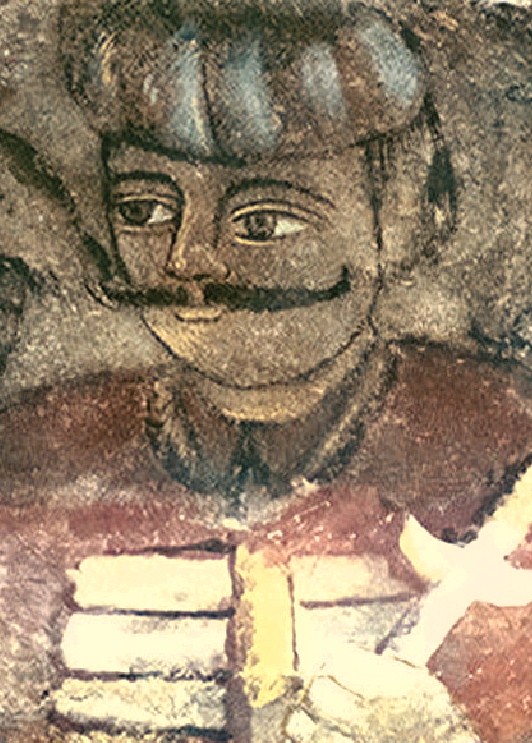
Vlad did not abandon his claim to Wallachia and settled in Transylvania. A Neo-Renaissance mural in a three-storey house in the main square of Sighișoara (which was uncovered on the 500th anniversary of the death of Vlad Dracul's son, Dracula) may depict Vlad Dracul after an original painting, according to Radu Florescu. The mural depicts a corpulent man with oval-shaped eyes and long moustaches wearing a white turban.
Alexander I Aldea went to Adrianople to do homage to the Ottoman Sultan, Murad II, in 1432. Vlad wanted to invade Wallachia with the support of Wallachian boyars (or noblemen) who had fled to Transylvania, but Alexander Aldea's principal official, Albu, prevented the invasion. Sigismund authorized Vlad to buy weapons and muster an army of exiled boyars only in 1434. In 1435, Alexander Aldea fell seriously ill and never recovered. Taking advantage of his brother's illness, Vlad broke into Wallachia, but Alexander Aldea and his Ottoman allies forced him to retreat.
Albert of Habsburg died on 27 October 1439. The majority of the Hungarian noblemen elected Wladyslaw III of Poland king in early 1440. Wladyslaw made the talented military commander, John Hunyadi, voivode of Transylvania in February 1441. Hunyadi who decided to restore the influence of Hungary in Wallachia ordered the burghers of Brașov to mint coins for Vlad around 15 October. Two or three weeks later, Hunyadi came to Târgoviște to meet Vlad, demanding him to join a crusade against the Ottoman Empire.
After Hunyadi defeated the Ottomans in Transylvania in March 1442, the Ottoman governor of Bulgaria accused Vlad of treachery, according to the contemporaneous Ottoman historian, Neșri. Murad summoned Vlad to Edirne to demonstrate his loyalty. Before departing, Vlad made his eldest son, Mircea, the ruler of Wallachia. Soon after he came to Edirne, he was captured at the sultan's command. He was held in captivity in Gallipoli.
Murad sent Hadim Țehabeddin, Beylerbey (or governor) of Rumelia, to annex Wallachia in August 1442. Hunyadi annihilated the Ottoman army in the Carpathian Mountains in September, and made Vlad's cousin, Basarab, voivode of Wallachia. Before the end of the year, Murad II released Vlad. Vlad had to pledge that he would not support the enemies of the Ottoman Empire and he would pay an annual tribute and send 500 Wallachian boys to serve as janissaries in the sultan's army. He was also forced to leave his two sons, Vlad and Radu, as hostages in the Ottoman Empire.
The relationship between Wallachia and Hungary soon deteriorated. In a letter written late in 1445 to the townspeople of Brașov, Vlad complained that Wallachian merchants were arrested in Transylvania, although he had left his "little children to be butchered for Christian peace so that [he] and [his] country [could] be subjects" of the king of Hungary. His words evidence that he was convinced that his two sons had been murdered in the Ottoman Empire, but the sultan did not harm the boys. In 1446 or 1447, Vlad made peace with the Ottomans, even agreeing to return the Bulgarian refugees to the Ottoman Empire. He intervened in the fight for the Moldavian throne in favor of Roman II of Moldavia in July 1447. The Poles also supported Roman, but Roman's opponent, Peter III, was Hunyadi's protégé.
Vlad's eldest sons, Mircea and Vlad Dracula, were first mentioned in a charter of Vlad on 20 January 1437. Mircea was born in about 1428, Vlad between 1429 and 1431. Their brother (Vlad Dracul's third son), Radu the Fair, was born before 2 August 1439. Florescu writes that Vlad Dracul's daughter, Alexandra, married the Wallachian boyar Vintila Florescu. Vlad Dracul also fathered illegitimate children. A Wallachian noblewoman, Călțuna, gave birth to Vlad the Monk. Almost no information is known about the life of another illegitimate son, Mircea.
Vlad II, also known as Vlad Dracul or Vlad the Dragon, was Voivode of Wallachia from 1436 to 1442, and again from 1443 to 1447. He is internationally known as the father of Vlad the Impaler, or Dracula. Sigismund also recognized him as the lawful Voivode of Wallachia, allowing him to settle in nearby Transylvania. Vlad could not assert his claim during the life of his half-brother, Alexander I Aldea, who acknowledged the suzerainty of the Ottoman Sultan, Murad II.
Early life
Vlad's early life is poorly documented. He was born in August 31, 1395, and was one of the numerous illegitimate sons of Mircea I of Wallachia. Vlad's modern biographers agree that he was sent as a hostage to Sigismund of Luxembourg, King of Hungary, in 1395 or 1396. Sigismund mentioned that Vlad had been educated at his court, suggesting that he spent his youth in Buda, Nuremberg and other major towns of Hungary and the Holy Roman Empire.Vlad left Buda for Poland without Sigismund's authorization in early 1423, but was captured before reaching the border. Before long, Sigismund acknowledged Dan II as the lawful ruler of Wallachia. The Byzantine historian, Doukas, recorded that Vlad was "an officer in the army" of the Byzantine Emperor, John VIII Palaiologos, and he "had access" to the imperial palace in Constantinople. Historian Radu Florescu says that Sigismund had appointed Vlad to receive John VIII (who had come to Italy to seek assistance against the Ottomans) in Venice in 1423, and Vlad accompanied the emperor back to Constantinople. After realizing that John VIII could not help him to seize Wallachia, Vlad returned to Hungary in 1429.
Sigismund made Vlad a first-class member of the Order of the Dragon (a chivalric order established by Sigismund) in Nuremberg on 8 February 1431. Other first-class members included Alfonso V of Aragon and Vytautas, Grand Duke of Lithuania. The dragon-shaped badge of the order gave rise to his Romanian sobriquet, Dracul ("the Dragon"), for which his sons became known as Dracula ("son of Dracul"). Vlad swore fealty to Sigismund who declared him the lawful prince of Wallachia. Vlad had to promise that he would protect the Roman Catholic Church. However, Sigismund did not assist him to seize Wallachia. In the summer, Vlad's half-brother, Alexander I Aldea, invaded Wallachia with Moldavian support and dethroned Dan II.
Vlad did not abandon his claim to Wallachia and settled in Transylvania. A Neo-Renaissance mural in a three-storey house in the main square of Sighișoara (which was uncovered on the 500th anniversary of the death of Vlad Dracul's son, Dracula) may depict Vlad Dracul after an original painting, according to Radu Florescu. The mural depicts a corpulent man with oval-shaped eyes and long moustaches wearing a white turban.
Alexander I Aldea went to Adrianople to do homage to the Ottoman Sultan, Murad II, in 1432. Vlad wanted to invade Wallachia with the support of Wallachian boyars (or noblemen) who had fled to Transylvania, but Alexander Aldea's principal official, Albu, prevented the invasion. Sigismund authorized Vlad to buy weapons and muster an army of exiled boyars only in 1434. In 1435, Alexander Aldea fell seriously ill and never recovered. Taking advantage of his brother's illness, Vlad broke into Wallachia, but Alexander Aldea and his Ottoman allies forced him to retreat.
Reign
Alexander Aldea died in autumn 1436, enabling Vlad Dracul to seize Wallachia with Hungarian support. He did not dismiss his predecessor's officials with the exception of Albu, who thus became his enemy. Vlad did not confirm the treaty that Alexander Aldea had concluded with the Ottomans, provoking an Ottoman incursion against Wallachia in November.Albert of Habsburg died on 27 October 1439. The majority of the Hungarian noblemen elected Wladyslaw III of Poland king in early 1440. Wladyslaw made the talented military commander, John Hunyadi, voivode of Transylvania in February 1441. Hunyadi who decided to restore the influence of Hungary in Wallachia ordered the burghers of Brașov to mint coins for Vlad around 15 October. Two or three weeks later, Hunyadi came to Târgoviște to meet Vlad, demanding him to join a crusade against the Ottoman Empire.
After Hunyadi defeated the Ottomans in Transylvania in March 1442, the Ottoman governor of Bulgaria accused Vlad of treachery, according to the contemporaneous Ottoman historian, Neșri. Murad summoned Vlad to Edirne to demonstrate his loyalty. Before departing, Vlad made his eldest son, Mircea, the ruler of Wallachia. Soon after he came to Edirne, he was captured at the sultan's command. He was held in captivity in Gallipoli.
Murad sent Hadim Țehabeddin, Beylerbey (or governor) of Rumelia, to annex Wallachia in August 1442. Hunyadi annihilated the Ottoman army in the Carpathian Mountains in September, and made Vlad's cousin, Basarab, voivode of Wallachia. Before the end of the year, Murad II released Vlad. Vlad had to pledge that he would not support the enemies of the Ottoman Empire and he would pay an annual tribute and send 500 Wallachian boys to serve as janissaries in the sultan's army. He was also forced to leave his two sons, Vlad and Radu, as hostages in the Ottoman Empire.
The relationship between Wallachia and Hungary soon deteriorated. In a letter written late in 1445 to the townspeople of Brașov, Vlad complained that Wallachian merchants were arrested in Transylvania, although he had left his "little children to be butchered for Christian peace so that [he] and [his] country [could] be subjects" of the king of Hungary. His words evidence that he was convinced that his two sons had been murdered in the Ottoman Empire, but the sultan did not harm the boys. In 1446 or 1447, Vlad made peace with the Ottomans, even agreeing to return the Bulgarian refugees to the Ottoman Empire. He intervened in the fight for the Moldavian throne in favor of Roman II of Moldavia in July 1447. The Poles also supported Roman, but Roman's opponent, Peter III, was Hunyadi's protégé.
Death in captivity
On 20 July 1447, John Hunyadi ordered the burghers of Brașov to give shelter to a pretender to the Wallachian throne, Vladislav, who was a cousin of Vlad. Hunyadi unexpectedly broke into Wallachia in late November, taking with him Vladislav (also known as Dan). Vlad fled from Târgoviște, but he was captured and killed in the marshes at Bălteni. In a letter written on 4 December 1447, Hunyadi styled himself "voivode of the Transalpine land" (Wallachia) and referred to Târgoviște as his fortress, implying that he had taken control of Wallachia by that time. Hunyadi placed Vladislav on the throne of Wallachia.Disputed burial place
The place of Vlad Dracul's burial has not been identified. Cazacu says, he was most probably buried in the Snagov Monastery. Florescu writes, Vlad Dracul was buried in a chapel in the Dealu Monastery near Târgoviște.Family
According to a widely accepted scholarly theory, Vlad's wife was "Cneajna", a daughter of Alexander I of Moldavia. She was called Eupraxia, according to Florescu. Historian Matei Cazacu writes that she was his second wife. He does not identify Vlad's first wife. Vlad's descendants were known as Drăculești, because they adopted Vlad's sobriquet as their patronymic (Dracula). The conflict between the Drăculești and the Dănești (the descendants of Dan I of Wallachia), and strifes between the members of the Drăculești line contributed to the political instability in 15th-century Wallachia.Vlad's eldest sons, Mircea and Vlad Dracula, were first mentioned in a charter of Vlad on 20 January 1437. Mircea was born in about 1428, Vlad between 1429 and 1431. Their brother (Vlad Dracul's third son), Radu the Fair, was born before 2 August 1439. Florescu writes that Vlad Dracul's daughter, Alexandra, married the Wallachian boyar Vintila Florescu. Vlad Dracul also fathered illegitimate children. A Wallachian noblewoman, Călțuna, gave birth to Vlad the Monk. Almost no information is known about the life of another illegitimate son, Mircea.
Parents
Father: Mircea I BASARAB #68094
Mother: Anca of UNKNOWN #69818
Family 1 :
Wife: Cneajna of BOGDAN-MUŞAT
Family 2 :
                                             _Nicholas Alexander BASARAB _+
                                            | (.... - 1364)
                       _Radu I BASARAB _____|
                      | (.... - 1383)       |
                      |                     |_Clara DOBOKAI ______________
                      |
 _Mircea I BASARAB ___|
| (1355 - 1417)       |
|                     |                      _____________________________
|                     |                     |
|                     |_Ana CALINA _________|
|                       (.... - 1439)       |
|                                           |_____________________________
|
|
|--Vlad II DRĂCULEŞTI
|  (1395 - 1447)
|                                            _____________________________
|                                           |
|                      _____________________|
|                     |                     |
|                     |                     |_____________________________
|                     |
|_Anca of UNKNOWN ____|
                      |
                      |                      _____________________________
                      |                     |
                      |_____________________|
                                            |
                                            |_____________________________