A Family Genealogy of
the Gentle House of Stapleton
the Gentle House of Stapleton
HomeFamily ListDatabaseSurname IndexIndex of IndividualsIndex of Noble HousesFamous and Infamous People
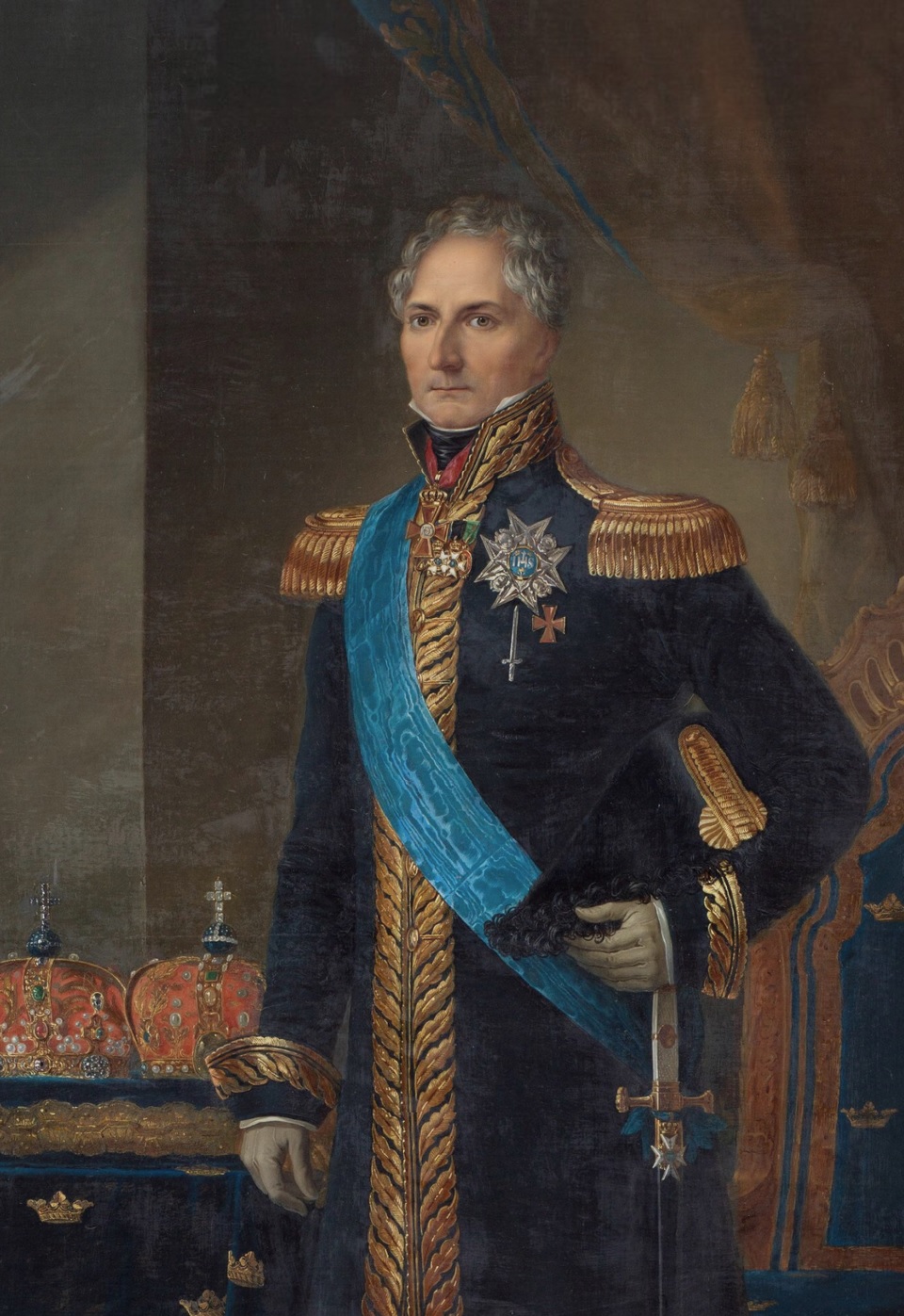
(King of Sweden and Norway, Prince of Pontevorvo) Jean BERNADOTTE #66272
26 JAN 1763 - 8 MAR 1844
AKA: Charles XIV John HOLSTEIN-GOTTORP
Personal Information
- TITLE: King of Sweden and Norway, Prince of Pontevorvo
- BIRTH: 26 JAN 1763, Pau, Pyrénées-Atlantiques, Aquitaine, France
- ADOPTION: 2 NOV 1810, Stockholm, Stockholm, Sweden
- DEATH: 8 MAR 1844, Stockholm, Stockholm, Sweden
Notes
Founder of the House of Bernadotte
Charles XIV John was King of Sweden and Norway from 1818 until his death in 1844 and the first monarch of the Bernadotte dynasty. In Norway, he is known as Charles III John; before he became royalty in Sweden, his name was Jean-Baptiste Jules Bernadotte. During the Napoleonic Wars, he participated in several battles as a Marshal of France.
Jean Bernadotte was born on 26 January 1763 in Pau, the capital of the province of Béarn in the southwestern part of the Kingdom of France. He was the son of Jean Henri Bernadotte (1711-1780), prosecutor at Pau, and his wife (married at Boeil, 20 February 1754) Jeanne de Saint-Jean (1728-1809), niece of the lay abbot of Sireix. The family name was originally du Poey (or de Pouey), but was changed to Bernadotte - a surname of an ancestress at the beginning of the 17th century. He was the youngest of five siblings, two of whom died in childhood. Soon after his birth, Baptiste was added to his name to distinguish him from his elder brother Jean Évangeliste. Bernadotte himself added Jules to his first names as a tribute to the French Empire under Napoleon I.
At the age of 14, he was apprenticed to a local attorney. Aged 17, his father's death dissuaded him from following in his career. Bernadotte joined the French Royal Army in 1780. Following the outbreak of the French Revolution, he demonstrated great military talent, rising rapidly through the ranks and becoming a brigadier general by 1794. He served with distinction in Italy and Germany, and was briefly Minister of War. His relationship with Napoleon was turbulent; nevertheless, Napoleon named him a Marshal of the Empire on the proclamation of the French Empire. Bernadotte played a significant role in the French victory at Austerlitz, and was made Prince of Pontecorvo as a reward. His marriage to Désirée Clary, whose sister was married to Joseph Bonaparte, made Bernadotte a member of the extended Imperial family.
In 1810, Bernadotte was unexpectedly elected the heir-presumptive (Crown Prince) to the childless King Charles XIII of Sweden, thanks to the advocacy of Baron Carl Otto Mörner, a Swedish courtier and obscure member of the Riksdag of the Estates. He assumed the name Charles (Carl) after his adoptive father and John (Johan), which is a Swedish version of Jean. He was subsequently named regent and generalissimo of the Swedish Armed Forces, soon after his arrival becoming de facto head of state for most of his time as Crown Prince. In 1812, following the sudden unprovoked French invasion of Swedish Pomerania, Crown Prince Charles John was instrumental in the creation of the Sixth Coalition by allying with Alexander I of Russia and using Swedish diplomacy to bring warring Russia and Britain together in alliance. He then played a major role in the writing of the Trachenberg Plan, the war-winning Allied campaign plan, and commanded the Allied Army of the North that defeated two concerted French attempts to capture Berlin and made the decisive attack on the last day of the catastrophic French defeat at Leipzig.
Following the conclusion of the Leipzig campaign and after liberating Bremen and Lübeck from the French in late November 1813, Charles John invaded Denmark, aiming to knock Napoleon's last major ally out of the war to secure the Coalition's northern flank in preparation for the invasion of France in 1814 and to secure Norway for Sweden, as stipulated in the several treaties that created the Sixth Coalition. After a brief campaign that saw the defeat of the Danish Army, King Frederick VI of Denmark was forced to sign the Treaty of Kiel on 15 January 1814 that ceded Norway to Sweden, that in turn led to the Swedish-Norwegian War of 1814, where Norway was defeated in nineteen days. This put Norway into a union with Sweden, which lasted for almost a century before its peaceful 1905 dissolution. The Swedish-Norwegian war is viewed as Sweden's last direct conflict and war.
Upon the death of Charles XIII in 1818, Charles John ascended to the throne. He presided over a period of peace and prosperity, and reigned until his death in 1844.
"Nobody has had a career in life like mine. I could perhaps have been able to agree to become Napoleon's ally: but when he attacked the country that had placed its fate in my hands, he could find in me no other than an opponent. The events that shook Europe and that gave her back her freedom are known. It is also known which part I played in that."
His remains were interred after a state funeral in Stockholm's Riddarholmen Church. He was succeeded by his only son, Oscar I.
Charles XIV John was King of Sweden and Norway from 1818 until his death in 1844 and the first monarch of the Bernadotte dynasty. In Norway, he is known as Charles III John; before he became royalty in Sweden, his name was Jean-Baptiste Jules Bernadotte. During the Napoleonic Wars, he participated in several battles as a Marshal of France.
Jean Bernadotte was born on 26 January 1763 in Pau, the capital of the province of Béarn in the southwestern part of the Kingdom of France. He was the son of Jean Henri Bernadotte (1711-1780), prosecutor at Pau, and his wife (married at Boeil, 20 February 1754) Jeanne de Saint-Jean (1728-1809), niece of the lay abbot of Sireix. The family name was originally du Poey (or de Pouey), but was changed to Bernadotte - a surname of an ancestress at the beginning of the 17th century. He was the youngest of five siblings, two of whom died in childhood. Soon after his birth, Baptiste was added to his name to distinguish him from his elder brother Jean Évangeliste. Bernadotte himself added Jules to his first names as a tribute to the French Empire under Napoleon I.
At the age of 14, he was apprenticed to a local attorney. Aged 17, his father's death dissuaded him from following in his career. Bernadotte joined the French Royal Army in 1780. Following the outbreak of the French Revolution, he demonstrated great military talent, rising rapidly through the ranks and becoming a brigadier general by 1794. He served with distinction in Italy and Germany, and was briefly Minister of War. His relationship with Napoleon was turbulent; nevertheless, Napoleon named him a Marshal of the Empire on the proclamation of the French Empire. Bernadotte played a significant role in the French victory at Austerlitz, and was made Prince of Pontecorvo as a reward. His marriage to Désirée Clary, whose sister was married to Joseph Bonaparte, made Bernadotte a member of the extended Imperial family.
In 1810, Bernadotte was unexpectedly elected the heir-presumptive (Crown Prince) to the childless King Charles XIII of Sweden, thanks to the advocacy of Baron Carl Otto Mörner, a Swedish courtier and obscure member of the Riksdag of the Estates. He assumed the name Charles (Carl) after his adoptive father and John (Johan), which is a Swedish version of Jean. He was subsequently named regent and generalissimo of the Swedish Armed Forces, soon after his arrival becoming de facto head of state for most of his time as Crown Prince. In 1812, following the sudden unprovoked French invasion of Swedish Pomerania, Crown Prince Charles John was instrumental in the creation of the Sixth Coalition by allying with Alexander I of Russia and using Swedish diplomacy to bring warring Russia and Britain together in alliance. He then played a major role in the writing of the Trachenberg Plan, the war-winning Allied campaign plan, and commanded the Allied Army of the North that defeated two concerted French attempts to capture Berlin and made the decisive attack on the last day of the catastrophic French defeat at Leipzig.
Following the conclusion of the Leipzig campaign and after liberating Bremen and Lübeck from the French in late November 1813, Charles John invaded Denmark, aiming to knock Napoleon's last major ally out of the war to secure the Coalition's northern flank in preparation for the invasion of France in 1814 and to secure Norway for Sweden, as stipulated in the several treaties that created the Sixth Coalition. After a brief campaign that saw the defeat of the Danish Army, King Frederick VI of Denmark was forced to sign the Treaty of Kiel on 15 January 1814 that ceded Norway to Sweden, that in turn led to the Swedish-Norwegian War of 1814, where Norway was defeated in nineteen days. This put Norway into a union with Sweden, which lasted for almost a century before its peaceful 1905 dissolution. The Swedish-Norwegian war is viewed as Sweden's last direct conflict and war.
Upon the death of Charles XIII in 1818, Charles John ascended to the throne. He presided over a period of peace and prosperity, and reigned until his death in 1844.
Death
On 26 January 1844, his 81st birthday, Charles John was found unconscious in his chambers having suffered a stroke. While he regained consciousness, he never fully recovered and died on the afternoon of 8 March. On his deathbed, he was heard to say:"Nobody has had a career in life like mine. I could perhaps have been able to agree to become Napoleon's ally: but when he attacked the country that had placed its fate in my hands, he could find in me no other than an opponent. The events that shook Europe and that gave her back her freedom are known. It is also known which part I played in that."
His remains were interred after a state funeral in Stockholm's Riddarholmen Church. He was succeeded by his only son, Oscar I.
Parents
Family 1 :
                                                                                               _Christian August SCHLESWIG-HOLSTEIN-GOTTORP _+
                                                                                              | (1672 - 1726)
                                            _Adolf Frederick SCHLESWIG-HOLSTEIN-GOTTORP ______|
                                           | (1710 - 1771)                                    |
                                           |                                                  |_Albertina Frederica of ZÄHRINGEN ___________+
                                           |                                                    (1682 - 1755)
 _Charles XIII SCHLESWIG-HOLSTEIN-GOTTORP _|
| (1748 - 1818)                            |
|                                          |                                                   _Frederick William I HOHENZOLLERN ____________
|                                          |                                                  | (1688 - 1740)
|                                          |_Louisa Ulrika of HOHENZOLLERN ___________________|
|                                            (1720 - 1782)                                    |
|                                                                                             |_Sophia Dorothea of HANOVER __________________+
|                                                                                               (1686 - 1757)
|
|--Jean BERNADOTTE
|  (1763 - 1844)
|                                                                                              _Christian August SCHLESWIG-HOLSTEIN-GOTTORP _+
|                                                                                             | (1672 - 1726)
|                                           _Frederick Augustus I SCHLESWIG-HOLSTEIN-GOTTORP _|
|                                          | (1711 - 1785)                                    |
|                                          |                                                  |_Albertina Frederica of ZÄHRINGEN ___________+
|                                          |                                                    (1682 - 1755)
|_Hedwig of SCHLESWIG-HOLSTEIN-GOTTORP ____|
  (1759 - 1818)                            |
                                           |                                                   ______________________________________________
                                           |                                                  |
                                           |_Ulrike Friederike of HESSE-KASSEL _______________|
                                             (1722 - 1787)                                    |
                                                                                              |______________________________________________