A Family Genealogy of
the Gentle House of Stapleton
the Gentle House of Stapleton
HomeFamily ListDatabaseSurname IndexIndex of IndividualsIndex of Noble HousesFamous and Infamous People
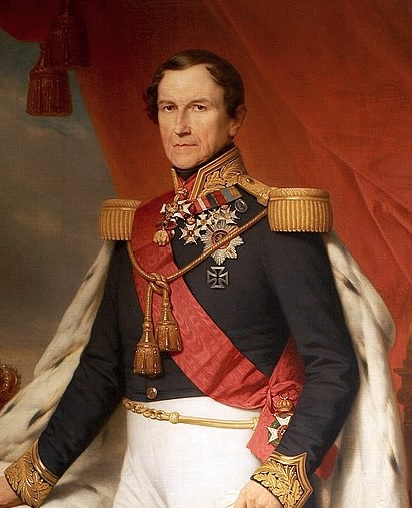
(King of the Belgians) Leopold I SAXE-COBURG-AND-GOTHA #65058
16 DEC 1790 - 10 DEC 1865
AKA: Leopold I of Belgium
Personal Information
- TITLE: King of the Belgians
- BIRTH: 16 DEC 1790, Coburg, Bayern, Germany
- DEATH: 10 DEC 1865, Brussels, Brussels (Bruxelles), Belgium
Notes
Founder of the House of Belgium
Leopold I (Leopold George Christian Frederick) was the first king of the Belgians, reigning from 21 July 1831 until his death in 1865.
From 1797, Leopold was tutored by Charles-Theodore Hoflender, a graduate of the University of Jena and a professor in Coburg. Under Hoflender, he studied Biblical history, Christianity, mathematics and languages, including Greek, Latin and Russian. In 1799, Leopold and his siblings also became tutored by Johann Philipp Hohnbaum, who specialised in teaching physical education and in teaching history of Great Britain, the Holy Roman Empire and Saxony. Hohnbaum cited that Leopold was fascinated by history and conflicts such as the Thirty Years War. Lutheran pastor Gottlieb Scheler taught Leopold catechism. Historian Olivier Defrance wrote that Scheler's teaching of Pietism had a lasting influence on Leopold. From 1804, aged thirteen, Leopold kept a diary and learnt English, French and Italian. Leopold often heard stories of military experience from his great-uncle, Prince Josias of Saxe-Coburg-Saalfeld, and inherited his father's passion for pigeon racing and floriculture.
After the Greek War of Independence, Leopold was offered the throne of Greece under the 1830 London Protocol that created an independent Greek state, but turned it down, believing it to be too precarious. Instead, he accepted the throne of Belgium in 1831 following the country's independence in 1830. The Belgian government offered the position to Leopold because of his diplomatic connections with royal houses across Europe, and because as the British-backed candidate, he was not affiliated with other powers, such as France, which were believed to have territorial ambitions in Belgium which might threaten the European balance of power created by the 1815 Congress of Vienna.
Leopold took his oath as King of the Belgians on 21 July 1831, an event commemorated annually as Belgian National Day. The following year, he married Princess Louise of Orléans, with whom he had four children. He also had two illegitimate sons by his mistress, Arcadie Claret. Leopold's reign was marked by attempts by the Dutch to recapture Belgium and, later, by internal political division between Liberals and Catholics. Leopold was considered a liberal Protestant ruler and encouraged economic modernisation, playing an important role in funding the creation of Belgium's first railway in 1835 and subsequent industrialisation. As a result of the ambiguities in the Belgian Constitution, Leopold was able to slightly expand the monarch's powers during his reign and assumed multiple ministries. He also played an important role in stopping the spread of the Revolutions of 1848 into Belgium. He died in 1865 and was succeeded by his son, Leopold II.
Leopold I (Leopold George Christian Frederick) was the first king of the Belgians, reigning from 21 July 1831 until his death in 1865.
Early life
Leopold was born at Ehrenburg Palace in Coburg in the small German duchy of Saxe-Coburg-Saalfeld in modern-day Bavaria on 16 December 1790. He was the eighth child and youngest son of Francis, Duke of Saxe-Coburg-Saalfeld by his second wife, Countess Augusta Reuss of Ebersdorf. In 1826, Saxe-Coburg had acquired the city of Gotha from the neighbouring Duchy of Saxe-Gotha-Altenburg and gave up Saalfeld to Saxe-Meiningen, becoming Saxe-Coburg and Gotha. The dynasty of this name was therefore founded by Leopold's eldest brother, Ernest I, Duke of Saxe-Coburg and Gotha, the father of Albert, Prince Consort of the United Kingdom. Leopold was baptised on 17 December 1790, with his baptismal name remaining the same as his birth name, in honour of Leopold II, Holy Roman Emperor. Leopold's paternal grandmother, Princess Sophie Antoinette of Brunswick-Wolfenbüttel, often assisted in parenting duties and signalled that he was her favourite grandson.From 1797, Leopold was tutored by Charles-Theodore Hoflender, a graduate of the University of Jena and a professor in Coburg. Under Hoflender, he studied Biblical history, Christianity, mathematics and languages, including Greek, Latin and Russian. In 1799, Leopold and his siblings also became tutored by Johann Philipp Hohnbaum, who specialised in teaching physical education and in teaching history of Great Britain, the Holy Roman Empire and Saxony. Hohnbaum cited that Leopold was fascinated by history and conflicts such as the Thirty Years War. Lutheran pastor Gottlieb Scheler taught Leopold catechism. Historian Olivier Defrance wrote that Scheler's teaching of Pietism had a lasting influence on Leopold. From 1804, aged thirteen, Leopold kept a diary and learnt English, French and Italian. Leopold often heard stories of military experience from his great-uncle, Prince Josias of Saxe-Coburg-Saalfeld, and inherited his father's passion for pigeon racing and floriculture.
Choice of Kingdoms
The youngest son of Francis, Duke of Saxe-Coburg-Saalfeld, Leopold took a commission in the Imperial Russian Army and fought against Napoleon after French troops overran Saxe-Coburg during the Napoleonic Wars. After Napoleon's defeat, Leopold moved to the United Kingdom, where in 1816 he married Princess Charlotte of Wales, the only child of the British Prince Regent (later George IV). Leopold and Charlotte's marriage was happy, but it ended after a year and a half when Charlotte died after delivering a stillborn son. Leopold continued to enjoy considerable status in Britain.After the Greek War of Independence, Leopold was offered the throne of Greece under the 1830 London Protocol that created an independent Greek state, but turned it down, believing it to be too precarious. Instead, he accepted the throne of Belgium in 1831 following the country's independence in 1830. The Belgian government offered the position to Leopold because of his diplomatic connections with royal houses across Europe, and because as the British-backed candidate, he was not affiliated with other powers, such as France, which were believed to have territorial ambitions in Belgium which might threaten the European balance of power created by the 1815 Congress of Vienna.
Leopold took his oath as King of the Belgians on 21 July 1831, an event commemorated annually as Belgian National Day. The following year, he married Princess Louise of Orléans, with whom he had four children. He also had two illegitimate sons by his mistress, Arcadie Claret. Leopold's reign was marked by attempts by the Dutch to recapture Belgium and, later, by internal political division between Liberals and Catholics. Leopold was considered a liberal Protestant ruler and encouraged economic modernisation, playing an important role in funding the creation of Belgium's first railway in 1835 and subsequent industrialisation. As a result of the ambiguities in the Belgian Constitution, Leopold was able to slightly expand the monarch's powers during his reign and assumed multiple ministries. He also played an important role in stopping the spread of the Revolutions of 1848 into Belgium. He died in 1865 and was succeeded by his son, Leopold II.
Death and funeral
On 23 November 1865, Leopold was urgently brought back from the Royal Château of Ardenne to Laeken due to health issues. He signed multiple royal decrees to hide his declining health, which was leaked to the public by the Moniteur on 2 December. Confined to his bed, Leopold summoned a pianist to play him the overture to Tannhäuser, as he was diagnosed with dysentery and had mobility struggles. On 9 December, Leopold was expected to die; however, he survived the night, and he was visited by his daughter-in-law, Marie Henriette of Austria, who knelt by his side and exchanged words with him. She convinced him to allow his family to visit, which they swiftly did, along with his personal chaplain, Pastor Frederick William Becker. Leopold said in their presence, "Forgive me, my God, forgive me." Holding his daughter-in-law's hand, Leopold died on 10 December 1865 at 11:45 am at the age of 74. He was succeeded by his 30-year-old son, Leopold II.Parents
Father: Francis SAXE-COBURG-SAALFELD #65057
Mother: Augusta of REUSS #65059
Family 1 :
Family 2 :
                                                              _Francis Josias WETTIN ______+
                                                             | (1697 - 1764)
                                 _Ernest Frederick WETTIN ___|
                                | (1723 - 1800)              |
                                |                            |_Anna Sophie of SCHWARZBURG _
                                |                              (1700 - 1780)
 _Francis SAXE-COBURG-SAALFELD _|
| (1750 - 1806)                 |
|                               |                             _Ferdinand Albert II WELF ___+
|                               |                            | (1680 - 1735)
|                               |_Sophie Antoinette of WELF _|
|                                 (1723 - 1802)              |
|                                                            |_Antoinette Amalie of WELF __+
|                                                              (1696 - 1762)
|
|--Leopold I SAXE-COBURG-AND-GOTHA
|  (1790 - 1865)
|                                                             _____________________________
|                                                            |
|                                ____________________________|
|                               |                            |
|                               |                            |_____________________________
|                               |
|_Augusta of REUSS _____________|
  (1757 - 1831)                 |
                                |                             _____________________________
                                |                            |
                                |____________________________|
                                                             |
                                                             |_____________________________