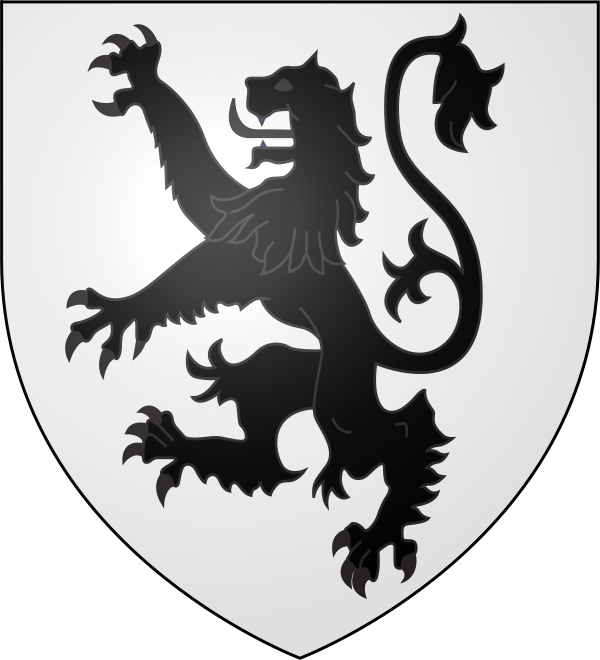
(King of Norway) Sverre Sigurdsson SVERRE #66723
BET 1145 AND 1151 - 9 MAR 1201/02
TITLE King of Norway-
BIRTH BET 1145 AND 1151
DEATH 9 MAR 1201/02, Bergen, Hordaland, Norway
Historical Notes
Founder of the House of Sverre
Sverre Sigurdsson (c. 1145/1151 - 9 March 1202) was the king of Norway from 1184 to 1202.
Many consider him one of the most important rulers in Norwegian history. He assumed power as the leader of the rebel party known as the Birkebeiner in 1177, during their struggle against King Magnus Erlingsson. After Magnus fell at the Battle of Fimreite in 1184, Sverre ruled as sole king of Norway. Differences with the Church, however, led to his excommunication in 1194. Another civil war began against the church-supported Baglers, which lasted beyond Sverre's death in 1202.
The most important historical source on Sverre's life is his biography, the Sverris saga, in part written while Sverre was alive. This saga is likely biased, since the foreword states that part was written under Sverre's direct sponsorship. Correspondence between the pope and the Norwegian bishops can be used as an alternate source when it comes to church affairs. The saga and the letters mostly agree about the hard facts.
Supposedly, King Sverre was short, so he usually directed his troops from horseback during battles. The contrast is great to the traditional Norse warrior ideals where the king was expected to lead his men from the front of the battle line. Sverre was a talented improviser, both in political and military life. His innovative tactics often helped the Birkebeiners against more tradition-bound opponents. During battle he had his men operate in smaller groups, while previously tactics similar to the shield wall had been preferred. This made the Birkebeiners more mobile and adaptable.
Early life
According to the saga, Sverre was born in 1151 to Gunnhild and her husband Unås, a comb maker from the Faroes. When Sverre was five, the family moved to the Faroes where Sverre was raised in the household of Unås' brother Roe, bishop of the Faroes on Kirkjubøargarður in Kirkjubøur. It was here that Sverre studied for the priesthood and was ordained. The priest school of Kirkjubøur must have been of a high standard, for Sverre was later described as very well educated. The legend says that he was hidden in a cave near the village. This cave actually exists and gave the mountain Sverrahola (303 m, "Sverre's cave") on the south tip of Streymoy its name.
Sverre, however, was not suited for a priestly life. The saga states that he had several dreams which he interpreted as a sign that he was destined for greater things. Further, in 1175, his mother revealed that Sverre was really the son of King Sigurd Munn. In the following year, Sverre travelled to Norway to seek his destiny.
Paternity
The tale told in Sverre's saga is the official version. Historians have questioned the veracity of it, especially with regard to Sverre's alleged paternity. Some historians have considered his claim to be King Sigurd's son to be false, as did many of his contemporaries. Others have believed the paternal claim to be true, while most historians have found that the paternal question cannot be given a definite answer. Although the fact that kings fathered illegitimate sons was taken for granted, other facts indicate that Sverre was in his early thirties when he came to Norway, such as the age of his own sons and nephews. It has been cited against Sverre's claim that according to Canon law, one had to be at least 30 years old to be eligible for the priesthood. If Sverre was 30 years old when he became a priest, this would place his birth no later than 1145, making his paternal claim impossible, as Sigurd Munn was born in 1133. This particular objection has lost credence as it has become clear that this age limit was routinely ignored in Scandinavia at the time. However, other objections remain, such as the fact that Sverre consistently refused to undergo an ordeal by fire to prove his claims. At the time, such a trial was routine for new claimants to the throne, and belief in its efficacy seems to have been universal; yet Sverre refused to undergo it. If Sverre's claim was false, however, he would lack royal legitimacy, dooming his plans to failure. Regardless, his motivation is clear: to capture the throne of Norway, whether he could prove royal blood or not. After all, Norway had seen other claimants, since Harald Gille, whose paternity was equally questionable.
The fact that Sigurd Munn's daughter Cecilia acknowledged Sverre as the son of Sigurd is inconclusive. Sverre's actions offered her a welcome possibility to divorce from the marriage with Folkvid the Lawspeaker, into which she claimed to have been forced by Erling Skakke.
Support from Earl Birger Brosa of Sweden is more a sign of pragmatic politics on the part of the Swedes, as their ally party in Norway needed a new leader and had chosen Sverre. Sverre was not the Earl's first choice, however. They had first supported Øystein Møyla, who had died at the Battle of Re in 1177. The Swedish dynastic lines were themselves engaged in civil war, and the current rulers of the family after King Erik were at war with the Danish king Valdemar. Erling Skakke had submitted to Valdemar some decades earlier, and it was beneficial for the Swedes at the time to support the opponents of Erling's regime, namely Sverre.
Death
During the return journey Sverre fell ill, and by the time they reached Bergen, the king was dying. On his death bed, Sverre appointed his sole living son, Håkon, as his heir and successor and in a letter advised him to seek reconciliation with the Church. Sverre died 9 March 1202. He was buried in Christ Church, Bergen, which was destroyed in 1591.
Sverre Sigurdsson (c. 1145/1151 - 9 March 1202) was the king of Norway from 1184 to 1202.
Many consider him one of the most important rulers in Norwegian history. He assumed power as the leader of the rebel party known as the Birkebeiner in 1177, during their struggle against King Magnus Erlingsson. After Magnus fell at the Battle of Fimreite in 1184, Sverre ruled as sole king of Norway. Differences with the Church, however, led to his excommunication in 1194. Another civil war began against the church-supported Baglers, which lasted beyond Sverre's death in 1202.
The most important historical source on Sverre's life is his biography, the Sverris saga, in part written while Sverre was alive. This saga is likely biased, since the foreword states that part was written under Sverre's direct sponsorship. Correspondence between the pope and the Norwegian bishops can be used as an alternate source when it comes to church affairs. The saga and the letters mostly agree about the hard facts.
Supposedly, King Sverre was short, so he usually directed his troops from horseback during battles. The contrast is great to the traditional Norse warrior ideals where the king was expected to lead his men from the front of the battle line. Sverre was a talented improviser, both in political and military life. His innovative tactics often helped the Birkebeiners against more tradition-bound opponents. During battle he had his men operate in smaller groups, while previously tactics similar to the shield wall had been preferred. This made the Birkebeiners more mobile and adaptable.
Early life
According to the saga, Sverre was born in 1151 to Gunnhild and her husband Unås, a comb maker from the Faroes. When Sverre was five, the family moved to the Faroes where Sverre was raised in the household of Unås' brother Roe, bishop of the Faroes on Kirkjubøargarður in Kirkjubøur. It was here that Sverre studied for the priesthood and was ordained. The priest school of Kirkjubøur must have been of a high standard, for Sverre was later described as very well educated. The legend says that he was hidden in a cave near the village. This cave actually exists and gave the mountain Sverrahola (303 m, "Sverre's cave") on the south tip of Streymoy its name.
Sverre, however, was not suited for a priestly life. The saga states that he had several dreams which he interpreted as a sign that he was destined for greater things. Further, in 1175, his mother revealed that Sverre was really the son of King Sigurd Munn. In the following year, Sverre travelled to Norway to seek his destiny.
Paternity
The tale told in Sverre's saga is the official version. Historians have questioned the veracity of it, especially with regard to Sverre's alleged paternity. Some historians have considered his claim to be King Sigurd's son to be false, as did many of his contemporaries. Others have believed the paternal claim to be true, while most historians have found that the paternal question cannot be given a definite answer. Although the fact that kings fathered illegitimate sons was taken for granted, other facts indicate that Sverre was in his early thirties when he came to Norway, such as the age of his own sons and nephews. It has been cited against Sverre's claim that according to Canon law, one had to be at least 30 years old to be eligible for the priesthood. If Sverre was 30 years old when he became a priest, this would place his birth no later than 1145, making his paternal claim impossible, as Sigurd Munn was born in 1133. This particular objection has lost credence as it has become clear that this age limit was routinely ignored in Scandinavia at the time. However, other objections remain, such as the fact that Sverre consistently refused to undergo an ordeal by fire to prove his claims. At the time, such a trial was routine for new claimants to the throne, and belief in its efficacy seems to have been universal; yet Sverre refused to undergo it. If Sverre's claim was false, however, he would lack royal legitimacy, dooming his plans to failure. Regardless, his motivation is clear: to capture the throne of Norway, whether he could prove royal blood or not. After all, Norway had seen other claimants, since Harald Gille, whose paternity was equally questionable.
The fact that Sigurd Munn's daughter Cecilia acknowledged Sverre as the son of Sigurd is inconclusive. Sverre's actions offered her a welcome possibility to divorce from the marriage with Folkvid the Lawspeaker, into which she claimed to have been forced by Erling Skakke.
Support from Earl Birger Brosa of Sweden is more a sign of pragmatic politics on the part of the Swedes, as their ally party in Norway needed a new leader and had chosen Sverre. Sverre was not the Earl's first choice, however. They had first supported Øystein Møyla, who had died at the Battle of Re in 1177. The Swedish dynastic lines were themselves engaged in civil war, and the current rulers of the family after King Erik were at war with the Danish king Valdemar. Erling Skakke had submitted to Valdemar some decades earlier, and it was beneficial for the Swedes at the time to support the opponents of Erling's regime, namely Sverre.
Death
During the return journey Sverre fell ill, and by the time they reached Bergen, the king was dying. On his death bed, Sverre appointed his sole living son, Håkon, as his heir and successor and in a letter advised him to seek reconciliation with the Church. Sverre died 9 March 1202. He was buried in Christ Church, Bergen, which was destroyed in 1591.
Parents
Mother : Gunnhild of UNKNOWN #66724