A Family Genealogy of
the Gentle House of Stapleton
the Gentle House of Stapleton
HomeFamily ListDatabaseSurname IndexIndex of IndividualsIndex of Noble HousesFamous and Infamous People
(King of Naples) Charles II ANJOU-NAPLES #64063
1254 - 5 MAY 1309
AKA: Charles II of Naples or Charles the Lame
Personal Information
- TITLE: King of Naples
- BIRTH: 1254
- DEATH: 5 MAY 1309, Napoli, Campania, Italy
Notes
Founder of the House of Anjou-Naples.
Charles II, also known as Charles the Lame (French: Charles le Boiteux; Italian: Carlo lo Zoppo), was King of Naples, Count of Provence and Forcalquier (1285-1309), Prince of Achaea (1285-1289), and Count of Anjou and Maine (1285-1290); he also was King of Albania (1285-1294), and claimed the Kingdom of Jerusalem from 1285. He was the son of Charles I of Anjou-one of the most powerful European monarchs in the second half of the 13th century-and Beatrice of Provence. His father granted Charles the Principality of Salerno in the Kingdom of Sicily (or Regno) in 1272 and made him regent in Provence and Forcalquier in 1279.
After the uprising known as the Sicilian Vespers against Charles's father, the island of Sicily became an independent kingdom under the rule of Peter III of Aragon in 1282. A year later, his father made Charles regent in the mainland territories of the Regno (or the Kingdom of Naples). Charles held a general assembly where unpopular taxes were abolished and the liberties of the noblemen and clerics were confirmed. He could not prevent the Aragonese from occupying Calabria and the islands in the Gulf of Naples. The Sicilian admiral Roger of Lauria captured him in a naval battle near Naples in 1284. As he was still in prison when his father died on 7 January 1285, his realms were ruled by regents. The remainder of his rule was spent seeking a resolution to the Sicilian war, diplomatic moves concerning his inheritance, and administrating the new Kingdom of Naples.
Charles I arranged a double marriage alliance with Stephen V of Hungary in 1269. Stephen's daughter, Maria was engaged to Charles, and Charles's sister, Isabelle to Maria's brother, Ladislaus. Charles fell seriously ill in late 1271. To encourage prayers for his recovery, his father donated Charles's wax sculptures to churches frequented by pilgrims in the whole kingdom. After Charles recovered, his father made a pilgrimage at the shrine of Saint Nicholas in Bari and sent gifts to the sanctuary of Mary the Virgin at Rocamadour.
Charles was dubbed with his brother, Philip, count of Taranto and some 100 Italian and French noble scions at the feast of Pentecost in 1272. On this occasion, his father Charles I granted him as appanage the Principality of Salerno, a fief customarily held by the heirs apparent to the throne by the previous royal house the Hauteville. The grant to Charles further stipulated that he could not claim more territories as a prince, thus keeping the area of Provence under direct royal rule.
Charles II, also known as Charles the Lame (French: Charles le Boiteux; Italian: Carlo lo Zoppo), was King of Naples, Count of Provence and Forcalquier (1285-1309), Prince of Achaea (1285-1289), and Count of Anjou and Maine (1285-1290); he also was King of Albania (1285-1294), and claimed the Kingdom of Jerusalem from 1285. He was the son of Charles I of Anjou-one of the most powerful European monarchs in the second half of the 13th century-and Beatrice of Provence. His father granted Charles the Principality of Salerno in the Kingdom of Sicily (or Regno) in 1272 and made him regent in Provence and Forcalquier in 1279.
After the uprising known as the Sicilian Vespers against Charles's father, the island of Sicily became an independent kingdom under the rule of Peter III of Aragon in 1282. A year later, his father made Charles regent in the mainland territories of the Regno (or the Kingdom of Naples). Charles held a general assembly where unpopular taxes were abolished and the liberties of the noblemen and clerics were confirmed. He could not prevent the Aragonese from occupying Calabria and the islands in the Gulf of Naples. The Sicilian admiral Roger of Lauria captured him in a naval battle near Naples in 1284. As he was still in prison when his father died on 7 January 1285, his realms were ruled by regents. The remainder of his rule was spent seeking a resolution to the Sicilian war, diplomatic moves concerning his inheritance, and administrating the new Kingdom of Naples.
Early life
Born in 1254, Charles was the son of Charles I of Anjou and Beatrice of Provence. He was the sole heir of his father's vast dominion. By the time of Charles's birth, his father had seized Provence and Forcalquier (in the Holy Roman Empire), Anjou and Maine (in France), and the Kingdom of Sicily (a fief of the Holy See). In the 1270s, his father also proclaimed himself King of Albania (in reference to his conquests along the Eastern coast of the Ionian Sea), partially asserted his claim to the Kingdom of Jerusalem, and inherited Achaea (in the Peloponnese). Charles's mother died in 1267, but his father's determination to keep his empire intact deprived Charles of his maternal inheritance during his father's lifetime.Charles I arranged a double marriage alliance with Stephen V of Hungary in 1269. Stephen's daughter, Maria was engaged to Charles, and Charles's sister, Isabelle to Maria's brother, Ladislaus. Charles fell seriously ill in late 1271. To encourage prayers for his recovery, his father donated Charles's wax sculptures to churches frequented by pilgrims in the whole kingdom. After Charles recovered, his father made a pilgrimage at the shrine of Saint Nicholas in Bari and sent gifts to the sanctuary of Mary the Virgin at Rocamadour.
Charles was dubbed with his brother, Philip, count of Taranto and some 100 Italian and French noble scions at the feast of Pentecost in 1272. On this occasion, his father Charles I granted him as appanage the Principality of Salerno, a fief customarily held by the heirs apparent to the throne by the previous royal house the Hauteville. The grant to Charles further stipulated that he could not claim more territories as a prince, thus keeping the area of Provence under direct royal rule.
Marriage
In 1270, he married Maria of Hungary (c. 1257 - 25 March 1323), the daughter of Stephen V of Hungary and Elizabeth the Cuman.Parents
Father: Charles I ANJOU #63594
Mother: Beatrice of BARCELONA #64065
Family 1 :
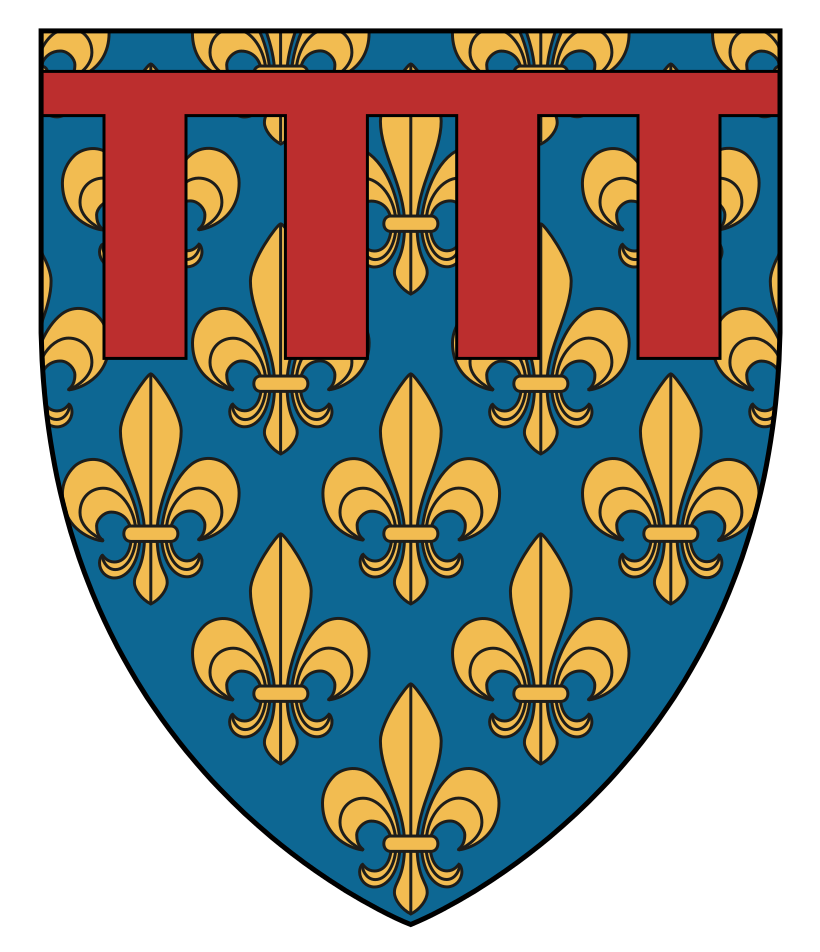
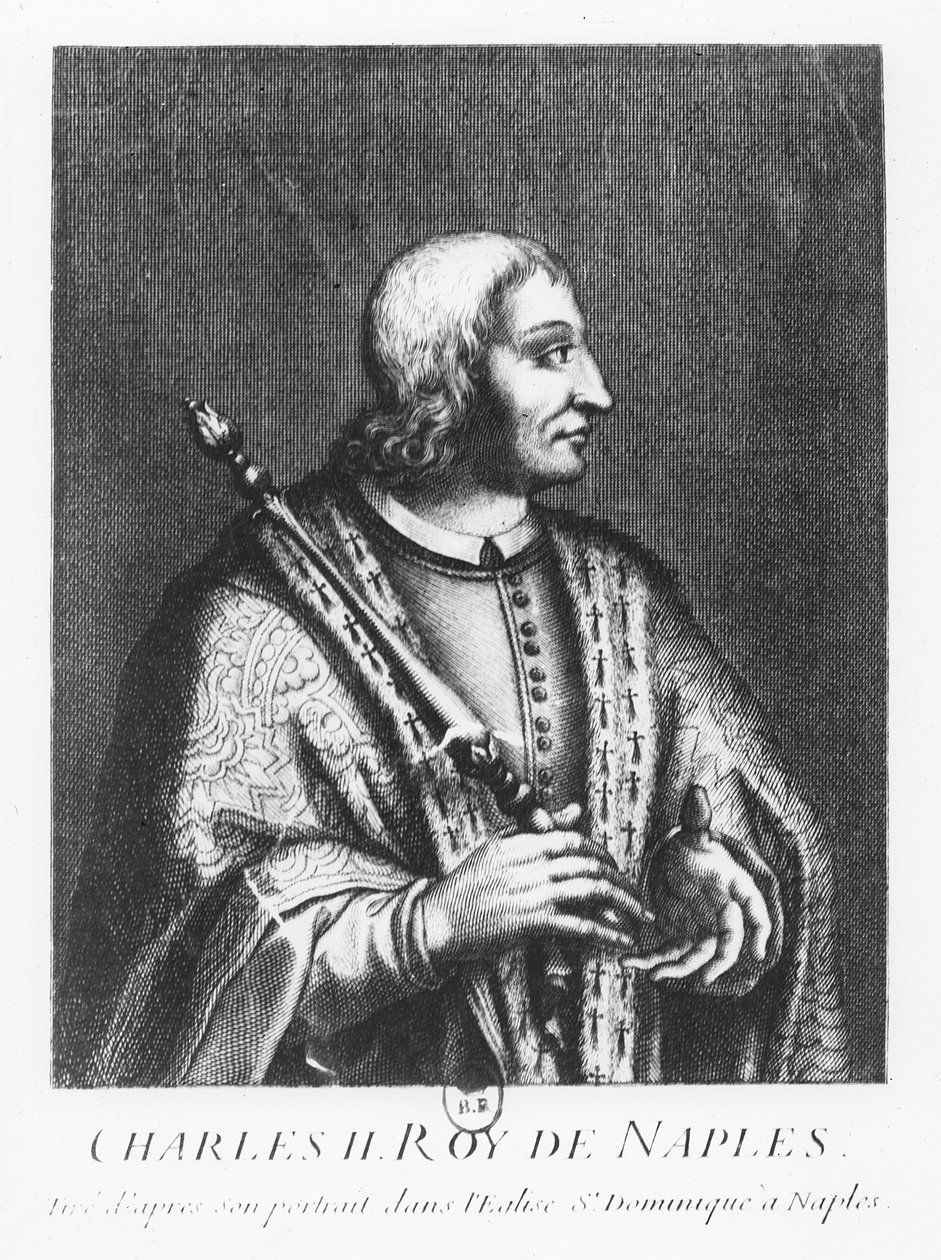
                                                       _Philip II CAPET ________+
                                                      | (1165 - 1223) m 1180
                          _Louis VIII CAPET __________|
                         | (1187 - 1226)              |
                         |                            |_Isabelle of FLANDERS ___
                         |                              (1170 - 1189) m 1180
 _Charles I ANJOU _______|
| (1226 - 1284)          |
|                        |                             _Alfonso VIII IVREA _____+
|                        |                            | (1155 - 1214)
|                        |_Blanche of IVREA __________|
|                          (1187 - 1252)              |
|                                                     |_Eleanor of PLANTAGENET _+
|                                                       (1161 - 1214)
|
|--Charles II ANJOU-NAPLES
|  (1254 - 1309)
|                                                      _Alfonso II ARAGON ______+
|                                                     | (1180 - 1208)
|                         _Ramon Berenguer IV ARAGON _|
|                        | (1198 - 1245)              |
|                        |                            |_Garsenda of SABRAN _____+
|                        |                              (1180 - 1242)
|_Beatrice of BARCELONA _|
  (1229 - 1267)          |
                         |                             _________________________
                         |                            |
                         |_Beatrice of SAVOY _________|
                           (1198 - 1267)              |
                                                      |_________________________