A Family Genealogy of
the Gentle House of Stapleton
the Gentle House of Stapleton
HomeFamily ListDatabaseSurname IndexIndex of IndividualsIndex of Noble HousesFamous and Infamous People
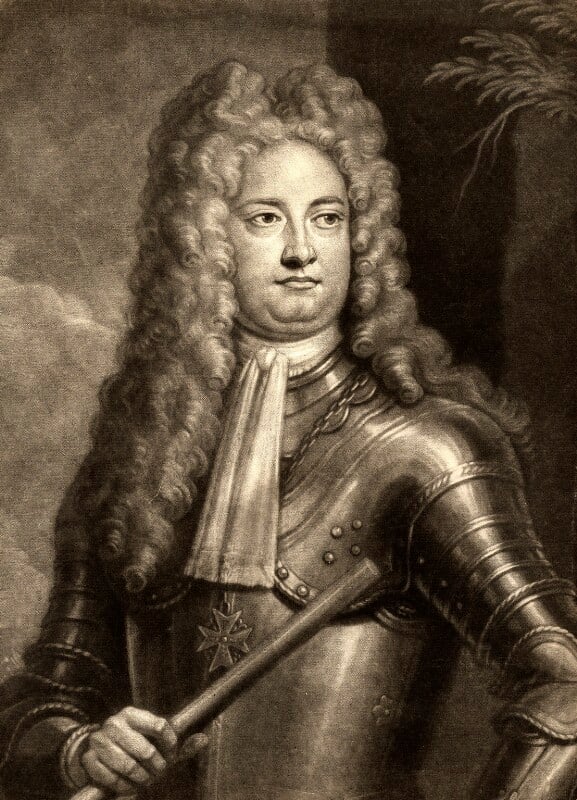
(Earl) William CADOGAN #77502
1672 - 17 JUL 1726
Personal Information
- TITLE: Earl
- BIRTH: 1672, Meath, Ireland
- DEATH: 17 JUL 1726, Kensington, London, England
Notes
Founder of the House of Cadogan.
General William Cadogan, 1st Earl Cadogan, KT, PC was a British army officer, diplomat and Whig politician. He began his military career during the Williamite War in Ireland in 1689 and ended it with the suppression of the Jacobite rising of 1715. A close associate and confidant of the Duke of Marlborough, he also sat in the English and British House of Commons from 1705 until 1716, when he was raised to the peerage as Baron Cadogan. A strong supporter of the Hanoverian Succession, he succeeded Marlborough in 1722 as Master-General of the Ordnance and senior army commander.
He was one of five children, including two brothers Ambrose and Charles and two sisters: Frances, who died young, and Penelope, who married Sir Thomas Prendergast, 1st Baronet. The family owned an estate at Liscarton in County Meath. His father served as High Sheriff of the county and also acquired property in County Limerick.
At the age of ten, he was sent to England to be educated at Westminster School, then run by Richard Busby. William's father intended him to take up a law career like himself and, in March 1687, he was accepted as a student at Trinity College, Dublin. By this time he had developed into a tall, well-built young man.
Britain had not yet officially entered the war, although military preparations were underway. He learnt to speak Dutch at this time, having already mastered French. During his time in Amsterdam, he fell in love with a Dutch heiress named Margaretta Munter. He married her two years later.
War broke out in 1702, following the accession of Queen Anne to the throne. Cadogan was made Marlborough's chief of staff, soon becoming a trusted figure alongside other intimates including the General's brother Charles Churchill, military secretary Adam de Cardonnel and the artillery commander Colonel Holcroft Blood. He also worked with the Dutch political representative Anthonie Heinsius. Cadogan soon demonstrated a flair for logistics and administration. He also came to head the extensive intelligence-gathering operations.
In early 1704 while travelling back to England, carrying important documents, his ship was attacked by a French Privateer. Fearing the seizure of his secret papers, he threw them over the side into the sea. However, his ship managed to get away and safely into harbour. While in London he had an audience with Queen Anne.
After Marlborough's dismissal from his posts at the end of 1711 Cadogan remained with the army, but refused to return with it when Britain withdrew from the war in 1712, going into voluntary exile with the Duke. In doing so he lost his rank, positions and emoluments under the crown. He was strongly opposed to the terms of the Treaty of Utrecht, agreed by the Tory Government, siding with the opposition Whigs who called for "No Peace Without Spain".
During Marlborough's voluntary exile during the last years of Queen Anne's reign, Cadogan accompanied him, and often acted as a go-between to maintain Marlborough's links with Britain. When the Hanoverian King George I succeeded in 1714, he reinstated Cadogan to his military offices. Marlborough was reappointed commander-in-chief, although as his deputy Cadogan had increasingly to take on much of the Duke's workload.
Cadogan was rewarded with the post of Ambassador to the Dutch Republic. He was tasked with restoring the relationship with Britain's recent ally which had been damaged by the country's sudden withdrawal from the war. Cadogan oversaw negotiations for a fresh treaty which was concluded the following year.
In 1715 he replaced the Duke of Argyll in command of the army charged with suppressing a Jacobite rising of 1715. A major rising had broken out in Autumn 1715 in the Scottish Highlands. Argyll as the senior Scottish commander led the initial attempts to contain the Jacobites from his position at Stirling Castle. In November Argyll fought an intense but indecisive battle against the Jacobites at the Battle of Sherrifmuir, after which it was decided in London that he was insufficiently committed to the Hanoverian cause.
Cadogan was then sent north by Marlborough to provide effective leadership. He brought with him many of the 6,000 Dutch troops supplied as part of a treaty commitment, whose shipping to Britain he had overseen. During his absence from The Hague, the diplomat Horatio Walpole fulfilled his duties there.
Cadogan found that Argyll remained reluctant to move against the Jacobites due to the wintery conditions. This continued even after James Stuart, who proclaimed himself to be King, arrived near Aberdeen in December.
Argyll and Cadogan worked together for a while, although the Duke no longer enjoyed the confidence of the government in London. Cadogan established better supply lines for the Army, personally took part in scouting operations, and organised the advance on the rebel capital at Perth. Rather than face a siege of the city, the Jacobites withdrew to Dundee. In February 1716, James abandoned the attempt to personally lead the rebellion in Scotland and sailed for the Continent.
Soon afterwards, Argyll resigned and went to London, turning over total command to Cadogan. He was shortly afterwards dismissed from all his military and political roles, amidst allegations that he had Jacobite sympathies. Cadogan's task was to oversee continued military operations across northern Scotland, forcing the leading Clan chiefs to submit. In April Cadogan declared the rebellion to be over, and returned to London the following month. Marlborough was instrumental in securing him a peerage as a reward for his efforts during the campaign.
When the Duke of Marlborough died in 1722, Cadogan walked at the head of the procession at his funeral. He succeeded his former commander as Master-General of the Ordnance (1722-1725). However, the Opposition's staunch hostility towards him meant that he had lost any political influence several years before his death on 17 July 1726. Despite his closeness to Marlborough, he was much occupied in his later years with a lawsuit brought against him by Marlborough's widow. He was himself rather litigious by nature, even engaging in a bitter lawsuit against his own sister Penelope over her son's inheritance.
General William Cadogan, 1st Earl Cadogan, KT, PC was a British army officer, diplomat and Whig politician. He began his military career during the Williamite War in Ireland in 1689 and ended it with the suppression of the Jacobite rising of 1715. A close associate and confidant of the Duke of Marlborough, he also sat in the English and British House of Commons from 1705 until 1716, when he was raised to the peerage as Baron Cadogan. A strong supporter of the Hanoverian Succession, he succeeded Marlborough in 1722 as Master-General of the Ordnance and senior army commander.
Early life
Cadogan was born in Ireland around 1672, the son of the barrister Henry Cadogan and his wife Bridget Waller, daughter of the regicide Sir Hardress Waller. His family were Irish Protestants of Welsh descent. William's grandfather William Cadogan served as an officer in Oliver Cromwell's New Model Army.He was one of five children, including two brothers Ambrose and Charles and two sisters: Frances, who died young, and Penelope, who married Sir Thomas Prendergast, 1st Baronet. The family owned an estate at Liscarton in County Meath. His father served as High Sheriff of the county and also acquired property in County Limerick.
At the age of ten, he was sent to England to be educated at Westminster School, then run by Richard Busby. William's father intended him to take up a law career like himself and, in March 1687, he was accepted as a student at Trinity College, Dublin. By this time he had developed into a tall, well-built young man.
Appointment
In June 1701, Cadogan was selected as Quartermaster General to Marlborough on the latter's appointment to command the British contingent in the Low Countries. Marlborough had been impressed by Cadogan's administrative skills and his courage and the Siege of Cork a decade before. He had Cadogan promoted to Colonel, over the heads of more experienced officers. In July 1701 he accompanied both Marlborough and King William to Holland.Britain had not yet officially entered the war, although military preparations were underway. He learnt to speak Dutch at this time, having already mastered French. During his time in Amsterdam, he fell in love with a Dutch heiress named Margaretta Munter. He married her two years later.
War broke out in 1702, following the accession of Queen Anne to the throne. Cadogan was made Marlborough's chief of staff, soon becoming a trusted figure alongside other intimates including the General's brother Charles Churchill, military secretary Adam de Cardonnel and the artillery commander Colonel Holcroft Blood. He also worked with the Dutch political representative Anthonie Heinsius. Cadogan soon demonstrated a flair for logistics and administration. He also came to head the extensive intelligence-gathering operations.
In early 1704 while travelling back to England, carrying important documents, his ship was attacked by a French Privateer. Fearing the seizure of his secret papers, he threw them over the side into the sea. However, his ship managed to get away and safely into harbour. While in London he had an audience with Queen Anne.
Exile
Cadogan was a strong supporter of the Hanoverian Succession which brought George I to the throne rather than the Jacobite candidate, styled by his supporters as James III.After Marlborough's dismissal from his posts at the end of 1711 Cadogan remained with the army, but refused to return with it when Britain withdrew from the war in 1712, going into voluntary exile with the Duke. In doing so he lost his rank, positions and emoluments under the crown. He was strongly opposed to the terms of the Treaty of Utrecht, agreed by the Tory Government, siding with the opposition Whigs who called for "No Peace Without Spain".
During Marlborough's voluntary exile during the last years of Queen Anne's reign, Cadogan accompanied him, and often acted as a go-between to maintain Marlborough's links with Britain. When the Hanoverian King George I succeeded in 1714, he reinstated Cadogan to his military offices. Marlborough was reappointed commander-in-chief, although as his deputy Cadogan had increasingly to take on much of the Duke's workload.
Cadogan was rewarded with the post of Ambassador to the Dutch Republic. He was tasked with restoring the relationship with Britain's recent ally which had been damaged by the country's sudden withdrawal from the war. Cadogan oversaw negotiations for a fresh treaty which was concluded the following year.
Jacobite Rebellion
Cadogan arrived in Scotland shortly after the indecisive Battle of Sheriffmuir. He oversaw the suppression of the Jacobite rising of 1715 in the Highlands.In 1715 he replaced the Duke of Argyll in command of the army charged with suppressing a Jacobite rising of 1715. A major rising had broken out in Autumn 1715 in the Scottish Highlands. Argyll as the senior Scottish commander led the initial attempts to contain the Jacobites from his position at Stirling Castle. In November Argyll fought an intense but indecisive battle against the Jacobites at the Battle of Sherrifmuir, after which it was decided in London that he was insufficiently committed to the Hanoverian cause.
Cadogan was then sent north by Marlborough to provide effective leadership. He brought with him many of the 6,000 Dutch troops supplied as part of a treaty commitment, whose shipping to Britain he had overseen. During his absence from The Hague, the diplomat Horatio Walpole fulfilled his duties there.
Cadogan found that Argyll remained reluctant to move against the Jacobites due to the wintery conditions. This continued even after James Stuart, who proclaimed himself to be King, arrived near Aberdeen in December.
Argyll and Cadogan worked together for a while, although the Duke no longer enjoyed the confidence of the government in London. Cadogan established better supply lines for the Army, personally took part in scouting operations, and organised the advance on the rebel capital at Perth. Rather than face a siege of the city, the Jacobites withdrew to Dundee. In February 1716, James abandoned the attempt to personally lead the rebellion in Scotland and sailed for the Continent.
Soon afterwards, Argyll resigned and went to London, turning over total command to Cadogan. He was shortly afterwards dismissed from all his military and political roles, amidst allegations that he had Jacobite sympathies. Cadogan's task was to oversee continued military operations across northern Scotland, forcing the leading Clan chiefs to submit. In April Cadogan declared the rebellion to be over, and returned to London the following month. Marlborough was instrumental in securing him a peerage as a reward for his efforts during the campaign.
Later life
Cadogan was a Whig Member of Parliament for Woodstock from 1705 to 1716. On 21 June 1716, he was made Baron Cadogan of Reading, having recently purchased Caversham Park, Oxfordshire (now Berkshire) near that town. He was also made a Knight of the Thistle and, the following year, a member of the Privy Council. Also in 1717, he was promoted to full general. On 8 May 1718 George I made him 1st Earl Cadogan, of Oakley, co. Buckingham, Viscount Caversham, of Caversham, co. Oxford and Earl Cadogan. In later years he also served as Master of the Robes (1714-1726) and governor of the Isle of Wight (1715-1726).When the Duke of Marlborough died in 1722, Cadogan walked at the head of the procession at his funeral. He succeeded his former commander as Master-General of the Ordnance (1722-1725). However, the Opposition's staunch hostility towards him meant that he had lost any political influence several years before his death on 17 July 1726. Despite his closeness to Marlborough, he was much occupied in his later years with a lawsuit brought against him by Marlborough's widow. He was himself rather litigious by nature, even engaging in a bitter lawsuit against his own sister Penelope over her son's inheritance.
Family
He married Margaret Cecilia Munter in April 1704 at The Hague. They had two daughters: Sarah (born 18 September 1705), who married Charles Lennox, 2nd Duke of Richmond, and Margaret (born 21 February 1707), who married Charles John Bentinck, fourth son of William Bentinck, 1st Earl of Portland. With no male heir the earldom became extinct. His younger brother Charles, who had married Elizabeth Sloane, the daughter of the noted Irish-born physician and landowner Sir Hans Sloane, inherited the barony by special remainder, passing it down through his son.Parents
Father: Henry CADOGAN #77500
Mother: Bridget WALLER #77501

                                             _Henry CADOGAN ______+
                                            |
                       _William CADOGAN ____|
                      | (1601 - 1660)       |
                      |                     |_____________________
                      |
 _Henry CADOGAN ______|
| (1642 - 1713)       |
|                     |                      _____________________
|                     |                     |
|                     |_____________________|
|                                           |
|                                           |_____________________
|
|
|--William CADOGAN
|  (1672 - 1726)
|                                            _____________________
|                                           |
|                      _____________________|
|                     |                     |
|                     |                     |_____________________
|                     |
|_Bridget WALLER _____|
                      |
                      |                      _____________________
                      |                     |
                      |_____________________|
                                            |
                                            |_____________________