A Family Genealogy of
the Gentle House of Stapleton
the Gentle House of Stapleton
HomeFamily ListDatabaseSurname IndexIndex of IndividualsIndex of Noble HousesFamous and Infamous People
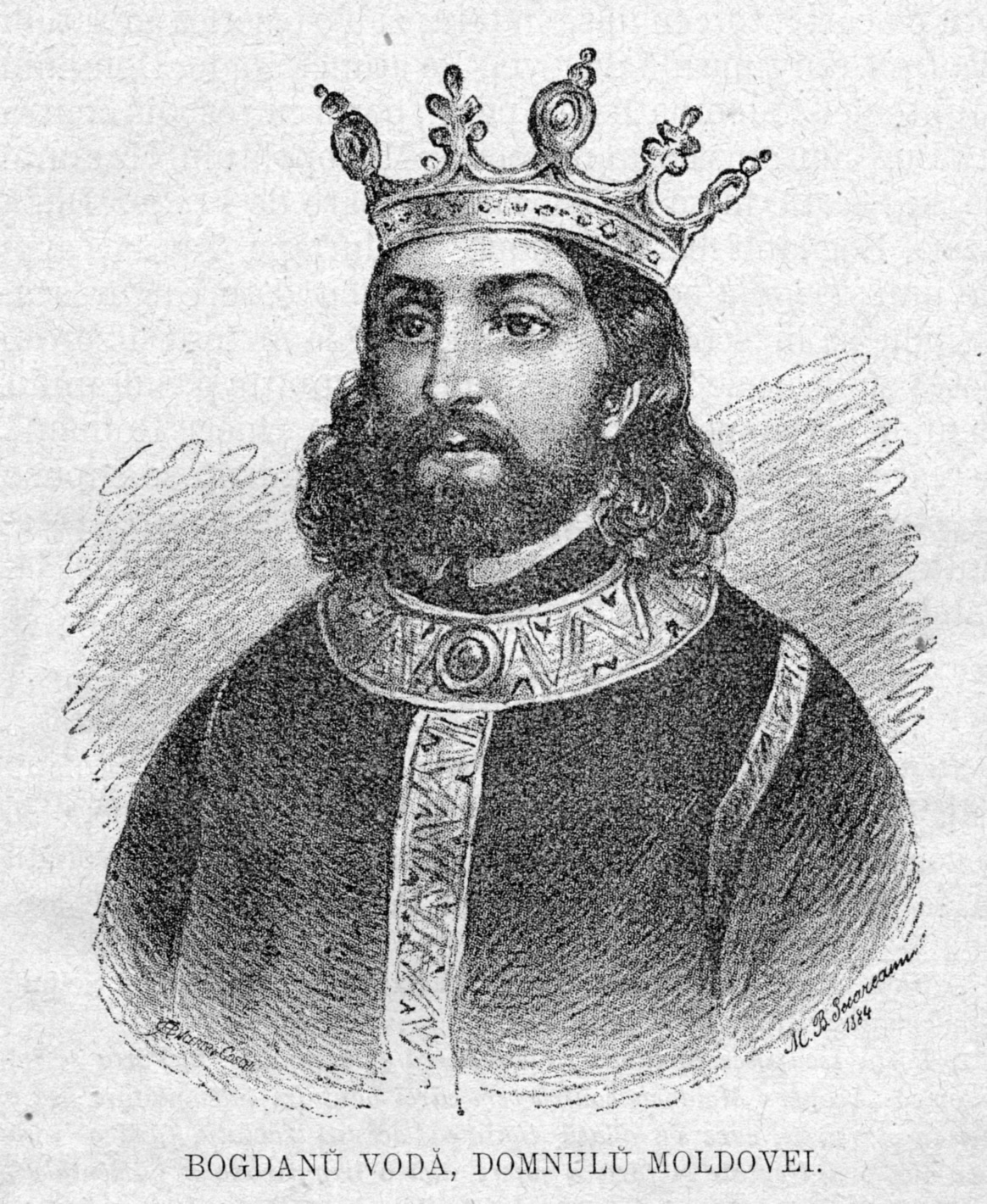
Bogdan I BOGDAN-MUŞAT #69771
____ - BET 1365 AND 1367
Personal Information
- DEATH: BET 1365 AND 1367
Notes
Notes
Founder of the House of Bogdan-Mușat
Bogdan I, commonly known as Bogdan the Founder, was the first independent ruler, or voivode, of Moldavia in the 1360s. He had initially been the voivode, or head, of the Vlachs in the Voivodeship of Maramure? in the Kingdom of Hungary. However, when the first certain record was made of him in 1343, he was mentioned as a former voivode who had become disloyal to Louis I of Hungary. He invaded the domains of a Vlach landowner who remained loyal to the king in 1349. Four years later, he was again mentioned as voivode in a charter, which was the last record of his presence in Maramureș.
Bogdan and his retainers left Maramureș for Moldavia between 1359 and 1365. Moldavia had been under the rule of Sas of Moldavia, a vassal of Louis I of Hungary, but the local Bulgarians were opposed to the Hungarian suzerainty. Bogdan expelled Sas's son, Balc, by force and seized the throne. In retaliation, Louis I confiscated Bogdan's estates in Maramureș in 1365. Bogdan reigned as the first voivode of Moldavia. He did not accept the overlordship of Louis I of Hungary, transforming Moldavia into the second independent Romanian principality.
At Cuhea, the ruins of a church and a manor house were unearthed. The church was dedicated to King St Stephen. Besides its dedication, the presence of a sacristy to the north of the altar shows that it was a Roman Catholic church, suggesting that either Bogdan's family converted to Catholicism or an originally Catholic church building was transformed to serve an Orthodox family. The oldest parts of the manor house were built in the late 13th century, but it was enlarged in the middle of the next century.
Bogdan's domain in Maramureș was described in a royal charter, issued on 2 February 1365. It listed Ieud, Bachkow, two Vișeus (now Vișeu de Jos and Vișeu de Sus), Moisei, Borșa and Keethzeleste among Bogdan's villages. The list shows that Bogdan's domain was situated along the upper courses of the rivers Iza and Vișeu.
No contemporaneous sources mentioned the reasons of Bogdan's movement to Moldavia. According to Tudor Salagean, Bogdan left Maramureș because he "failed to get rid of the Hungarian hegemony". Victor Spinei writes that Dragoș's example encouraged Bogdan to cross the Carpathian Mountains, especially because he knew that the Vlachs in Moldavia were opposed to Louis I's authority. A diploma of King Louis, issued on 20 March 1360, mentioned that the Vlachs rose up in open rebellion in Moldavia, but Dragoș of Giulești - one of the six sons of Bogdan's former opponent, Giula of Giulești - defeated them, restoring the king's rule in Moldavia.
According to a royal charter, dated to 2 February 1365, Bogdan and his (unnamed) sons had "stealthily" fled from Hungary because they wanted to seize Moldavia. Balc, the son of Sas of Moldavia, tried to resist them, but Bogdan and his sons forced him to withdraw to Hungary. In retaliation, Louis I of Hungary confiscated Bogdan's domain in Maramureș and donated it to Balc and his brothers. Bogdan seized the province after Balc left for Hungary. Bogdan's action took place before 2 February 1365, but the exact date is debated. The earliest year, proposed by historians, is 1359; historians suggesting this date say that Bogdan took advantage of the local Vlachs' rebellion, documented by the 1360 royal diploma. Dennis Deletant writes that Bogdan invaded Moldavia around 1363. Radu Carciumaru proposes the same year; he says that Bogdan took advantage both of a conflict between Louis I of Hungary and Charles IV, Holy Roman Emperor and of the decisive victory of the Lithuanians over the Tatars in the Battle of Blue Waters. Bogdan's action took place in 1364, according to Victor Spinei, and only in 1365, according to Tudor Salagean.
John of Küküllőo mentioned that Louis I's army often invaded Moldavia, but the "number of Vlachs inhabiting that land increased, transforming it into a country". John of Küküllő even wrote that Louis I fought most frequently against Moldavia and Serbia during his reign. However, the king's itinerary, reconstructed based on his charters, suggests that he could only take part in military actions against Moldavia in 1366, 1368 and 1370. John of Küküllő stated that the king's suzerainty had been restored in Moldavia. According to Spinei, Louis I could only force Bogdan's son, Lațcu, to yield to him after Louis became King of Poland in 1370.
The boundaries of Moldavia during Bogdan's reign cannot exactly be determined. According to historian Laurențiu R&acaron;dvan, his realm included the northwestern regions between the Carpathian Mountains and the Dniester River, maybe as far as the Cheremosh River. Bogdan's seat was at Siret where a royal residence had been built during Dragoș's reign, according to the Moldavian chronicles. He died in 1365 or 1367. He was buried in the Saint Nicholas Monastery at Radauti. Bogdan was succeeded by his son, Lațcu.
Bogdan I, commonly known as Bogdan the Founder, was the first independent ruler, or voivode, of Moldavia in the 1360s. He had initially been the voivode, or head, of the Vlachs in the Voivodeship of Maramure? in the Kingdom of Hungary. However, when the first certain record was made of him in 1343, he was mentioned as a former voivode who had become disloyal to Louis I of Hungary. He invaded the domains of a Vlach landowner who remained loyal to the king in 1349. Four years later, he was again mentioned as voivode in a charter, which was the last record of his presence in Maramureș.
Bogdan and his retainers left Maramureș for Moldavia between 1359 and 1365. Moldavia had been under the rule of Sas of Moldavia, a vassal of Louis I of Hungary, but the local Bulgarians were opposed to the Hungarian suzerainty. Bogdan expelled Sas's son, Balc, by force and seized the throne. In retaliation, Louis I confiscated Bogdan's estates in Maramureș in 1365. Bogdan reigned as the first voivode of Moldavia. He did not accept the overlordship of Louis I of Hungary, transforming Moldavia into the second independent Romanian principality.
Origins
Bogdan's early life is subject to scholarly debate According to a theory, Bogdan was descended from a Vlach family, native to Maramureș. His ancestral estates formed a "valley knezate" with its center in Cuhea. According to a concurrent theory, Bogdan was identical with one Voivode Bogdan, son of Mikola. A royal charter, dated to 6 October 1335, narrated that Charles I of Hungary had sent Ladislaus Jánki, Archbishop of Kalocsa, to Clisura Dun&acaron;rii three times in 1334 and 1335 to make preparations for the movement of Bogdan, son of Mikola, from "his country" to the Kingdom of Hungary. Historian Pál Engel says that Voivode Bogdan led a large group of Vlachs from Serbia to Hungary on this occasion. The royal charter neither referred to Bogdan's ethnicity, nor mentioned large groups of Vlachs. However, the use of titles such as "vojvoda" and "knez", along with the name Bogdan, suggests a Slavic rather than Aromanian composition within that group. Historian Victor Spinei emphasizes that the "similitude of the names is insufficient to identify" Bogdan, son of Mikola, with Bogdan, the future voivode of Moldavia.At Cuhea, the ruins of a church and a manor house were unearthed. The church was dedicated to King St Stephen. Besides its dedication, the presence of a sacristy to the north of the altar shows that it was a Roman Catholic church, suggesting that either Bogdan's family converted to Catholicism or an originally Catholic church building was transformed to serve an Orthodox family. The oldest parts of the manor house were built in the late 13th century, but it was enlarged in the middle of the next century.
Bogdan's domain in Maramureș was described in a royal charter, issued on 2 February 1365. It listed Ieud, Bachkow, two Vișeus (now Vișeu de Jos and Vișeu de Sus), Moisei, Borșa and Keethzeleste among Bogdan's villages. The list shows that Bogdan's domain was situated along the upper courses of the rivers Iza and Vișeu.
Voivode of Moldavia
The biographer of Louis I of Hungary, John of Küküllő recorded that "Bogdan, the voivode of the Romanians of Maramureș, gathering the Romanians from this district, secretly passed into Moldavia, which was subject to the Hungarian Crown, but had been abandoned by its inhabitants because of the vicinity of the Tatars." Moldavia had been a defensive march of the Kingdom of Hungary. According to the earliest Moldavian chronicles, it came into being when a Vlach lord, Dragoș, and his people left Maramureș and settled on the banks of the Moldova River in the late 1340s or the 1350s. Both Dragoș and his successor, Sas, accepted Louis I's suzerainty.No contemporaneous sources mentioned the reasons of Bogdan's movement to Moldavia. According to Tudor Salagean, Bogdan left Maramureș because he "failed to get rid of the Hungarian hegemony". Victor Spinei writes that Dragoș's example encouraged Bogdan to cross the Carpathian Mountains, especially because he knew that the Vlachs in Moldavia were opposed to Louis I's authority. A diploma of King Louis, issued on 20 March 1360, mentioned that the Vlachs rose up in open rebellion in Moldavia, but Dragoș of Giulești - one of the six sons of Bogdan's former opponent, Giula of Giulești - defeated them, restoring the king's rule in Moldavia.
According to a royal charter, dated to 2 February 1365, Bogdan and his (unnamed) sons had "stealthily" fled from Hungary because they wanted to seize Moldavia. Balc, the son of Sas of Moldavia, tried to resist them, but Bogdan and his sons forced him to withdraw to Hungary. In retaliation, Louis I of Hungary confiscated Bogdan's domain in Maramureș and donated it to Balc and his brothers. Bogdan seized the province after Balc left for Hungary. Bogdan's action took place before 2 February 1365, but the exact date is debated. The earliest year, proposed by historians, is 1359; historians suggesting this date say that Bogdan took advantage of the local Vlachs' rebellion, documented by the 1360 royal diploma. Dennis Deletant writes that Bogdan invaded Moldavia around 1363. Radu Carciumaru proposes the same year; he says that Bogdan took advantage both of a conflict between Louis I of Hungary and Charles IV, Holy Roman Emperor and of the decisive victory of the Lithuanians over the Tatars in the Battle of Blue Waters. Bogdan's action took place in 1364, according to Victor Spinei, and only in 1365, according to Tudor Salagean.
John of Küküllőo mentioned that Louis I's army often invaded Moldavia, but the "number of Vlachs inhabiting that land increased, transforming it into a country". John of Küküllő even wrote that Louis I fought most frequently against Moldavia and Serbia during his reign. However, the king's itinerary, reconstructed based on his charters, suggests that he could only take part in military actions against Moldavia in 1366, 1368 and 1370. John of Küküllő stated that the king's suzerainty had been restored in Moldavia. According to Spinei, Louis I could only force Bogdan's son, Lațcu, to yield to him after Louis became King of Poland in 1370.
The boundaries of Moldavia during Bogdan's reign cannot exactly be determined. According to historian Laurențiu R&acaron;dvan, his realm included the northwestern regions between the Carpathian Mountains and the Dniester River, maybe as far as the Cheremosh River. Bogdan's seat was at Siret where a royal residence had been built during Dragoș's reign, according to the Moldavian chronicles. He died in 1365 or 1367. He was buried in the Saint Nicholas Monastery at Radauti. Bogdan was succeeded by his son, Lațcu.
Legacy
The foundation of the independent Principality of Moldavia - the second independent Romanian state after the Principality of Wallachia - is attributed to Bogdan by modern historians. The list of the voivodes of Moldavia, recorded in the Bistrița Monastery in 1407, begins with Bogdan, without referring to his predecessors, Dragoș and Sas, who were mentioned in all Moldavian chronicles. In Turkic documents, Moldavia was mentioned as "Kara-Bogdan", or "Black Bogdan", from the late 14th century onward, which also shows his fame.Family 1 :