A Family Genealogy of
the Gentle House of Stapleton
the Gentle House of Stapleton
HomeFamily ListDatabaseSurname IndexIndex of IndividualsIndex of Noble HousesFamous and Infamous People
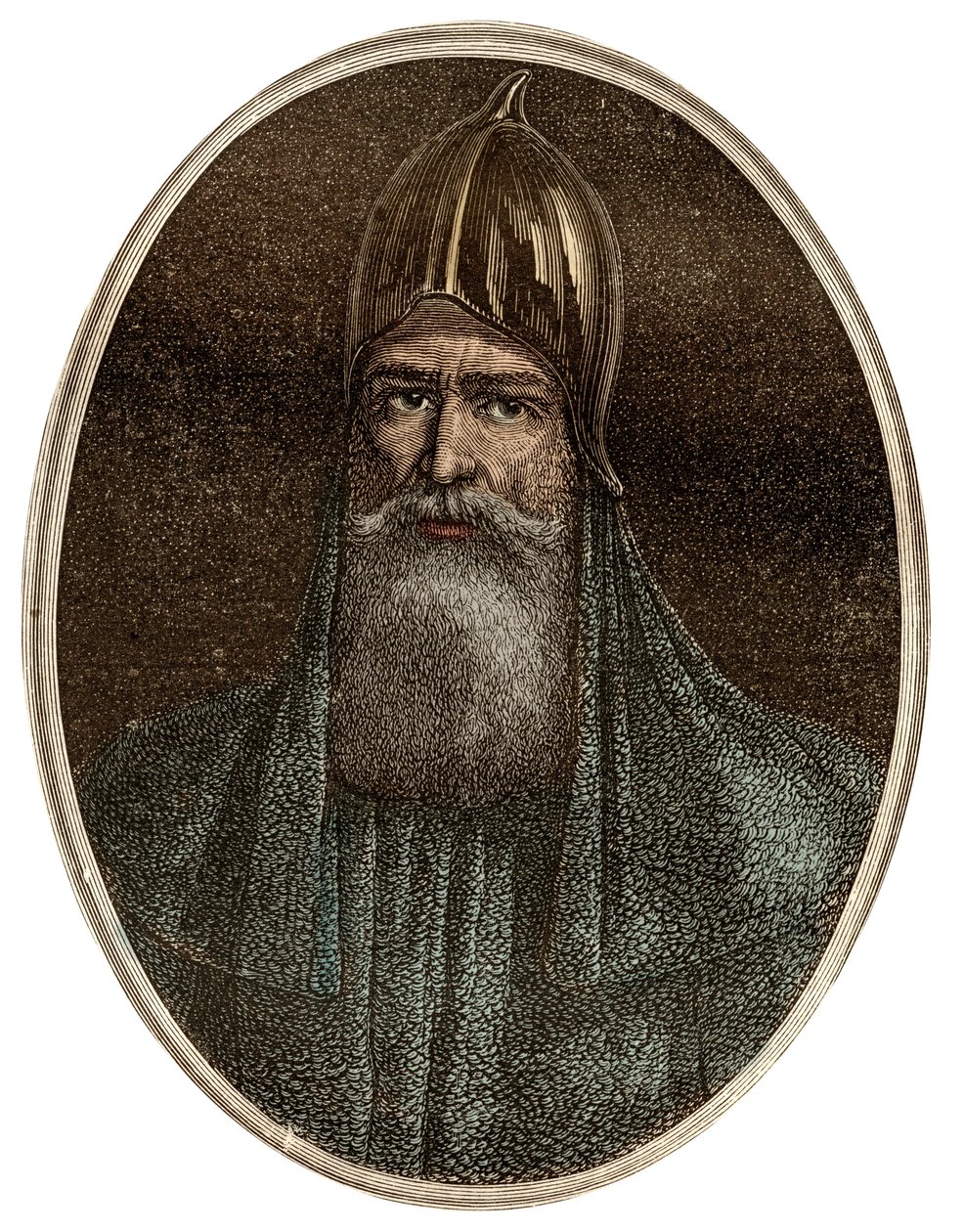
(Prince of Ladoga and Novgorod) RURIK I #65484
ABT 830 - 879
Personal Information
- TITLE: Prince of Ladoga and Novgorod
- BIRTH: ABT 830
- DEATH: 879, Novgorod, Russia
Notes
Founder of the House of Rurik
The earliest mention of Rurik is contained in the Primary Chronicle, traditionally ascribed to Nestor and compiled in c. 1113, which states that East Slavic and Finnic tribes in 860-862 (including the Chuds, Slovenes, Krivichs, Meryans and Ves) "drove the Varangians back beyond the sea, refused to pay them tribute, and set out to govern themselves". Afterwards the tribes started fighting each other and decided to invite the Varangians, led by Rurik, to reestablish order. Rurik came along with his younger brothers Sineus and Truvor and a large retinue.
According to the chronicle, Rurik was one of the Rus', a Varangian tribe. Most historians believe that the Rus' were of Scandinavian origin, more specifically from what is currently coastal eastern Sweden around the eighth century. According to the prevalent theory, the name Rus' is derived from an Old Norse term for "the men who row", from an older name for the Swedish coastal area of Roslagen.
Sineus established himself at Beloozero, and Truvor at the town of Izborsk. Truvor and Sineus died shortly after the establishment of their territories, and Rurik consolidated these lands into his own territory, extending his rule in northern Russia. Askold and Dir, followers of Rurik who were sent to Constantinople, seized Kiev before launching an attack recorded in Byzantine sources for the year 860.
The Laurentian Codex of 1377, which contains the oldest surviving version of the Primary Chronicle, states that Rurik first settled in Novgorod ("newtown"), while the Hypatian Codex of the 1420s states that Rurik first settled in Ladoga, before moving his seat of power to the newly founded city of Novgorod, a fort built not far from the source of the Volkhov River, where he stayed until his death.
Rurik is said to have remained in power until his death some time in the 870s. On his deathbed, Rurik bequeathed his realm to Oleg, who belonged to his kin, and entrusted to Oleg's hands his son Igor, for he was very young. Oleg moved the capital to Kiev (by murdering the then-rulers and taking the city) and founded the state of Kievan Rus', which was ruled by Rurik's successors (his son Igor and Igor's descendants). The state persisted until the Mongol invasion in 1240.
Traditionally, Rurik has been considered the founder of the Rurik dynasty, which was the ruling dynasty of Kievan Rus' and its principalities, and ultimately the Tsardom of Russia, until the death of Feodor I in 1598. As a result, he is considered to be the traditional founder of the Russian monarchy.
The earliest mention of Rurik is contained in the Primary Chronicle, traditionally ascribed to Nestor and compiled in c. 1113, which states that East Slavic and Finnic tribes in 860-862 (including the Chuds, Slovenes, Krivichs, Meryans and Ves) "drove the Varangians back beyond the sea, refused to pay them tribute, and set out to govern themselves". Afterwards the tribes started fighting each other and decided to invite the Varangians, led by Rurik, to reestablish order. Rurik came along with his younger brothers Sineus and Truvor and a large retinue.
According to the chronicle, Rurik was one of the Rus', a Varangian tribe. Most historians believe that the Rus' were of Scandinavian origin, more specifically from what is currently coastal eastern Sweden around the eighth century. According to the prevalent theory, the name Rus' is derived from an Old Norse term for "the men who row", from an older name for the Swedish coastal area of Roslagen.
Sineus established himself at Beloozero, and Truvor at the town of Izborsk. Truvor and Sineus died shortly after the establishment of their territories, and Rurik consolidated these lands into his own territory, extending his rule in northern Russia. Askold and Dir, followers of Rurik who were sent to Constantinople, seized Kiev before launching an attack recorded in Byzantine sources for the year 860.
The Laurentian Codex of 1377, which contains the oldest surviving version of the Primary Chronicle, states that Rurik first settled in Novgorod ("newtown"), while the Hypatian Codex of the 1420s states that Rurik first settled in Ladoga, before moving his seat of power to the newly founded city of Novgorod, a fort built not far from the source of the Volkhov River, where he stayed until his death.
Rurik is said to have remained in power until his death some time in the 870s. On his deathbed, Rurik bequeathed his realm to Oleg, who belonged to his kin, and entrusted to Oleg's hands his son Igor, for he was very young. Oleg moved the capital to Kiev (by murdering the then-rulers and taking the city) and founded the state of Kievan Rus', which was ruled by Rurik's successors (his son Igor and Igor's descendants). The state persisted until the Mongol invasion in 1240.
Traditionally, Rurik has been considered the founder of the Rurik dynasty, which was the ruling dynasty of Kievan Rus' and its principalities, and ultimately the Tsardom of Russia, until the death of Feodor I in 1598. As a result, he is considered to be the traditional founder of the Russian monarchy.
Family 1 :